
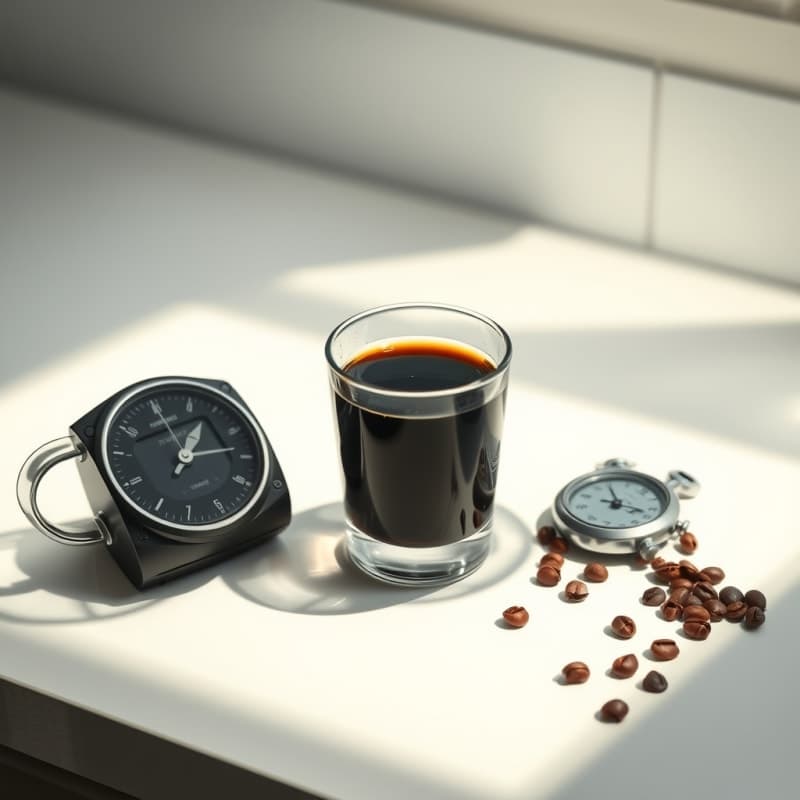
You have a coffee before training, or maybe a pre-workout you picked up at the gym, but you've probably never actually calculated the dose or paid real attention to timing. Caffeine is one of the most studied supplements in sports science, and at the same time one of the most misused: some people take too little to feel anything, others overdo it and spend the whole session with a racing heart and shaky hands, and others take it too late and pay for it at night without ever connecting the two. The problem is rarely caffeine itself — it's using it without understanding how it actually works in the body during exercise.
What Caffeine Actually Does in Your Body During a Workout
Caffeine works by blocking adenosine receptors in the central nervous system. Adenosine is the compound that builds up throughout the day and signals fatigue to the brain; by occupying those receptors without activating them, caffeine lowers your perceived effort during training and increases central motor drive — the signal your brain sends telling your muscles to keep working. The effect isn't purely mental: research shows caffeine also changes peripheral processes, like calcium handling inside the muscle fiber and extracellular potassium regulation, two mechanisms directly tied to your ability to produce force repeatedly.
In practice, that translates into measurable gains: strength, jump power, movement velocity, muscular endurance, and sprint performance all show up consistently better with caffeine than with placebo in controlled studies. The effect size tends to be small to moderate — caffeine won't turn a bad session into a great one — but it's real, and it adds up, workout after workout, in the total volume you're able to sustain over weeks.
Source: PubMed
Caffeine doesn't replace training, sleep, or food — it just helps you get more out of the effort you were already going to make.
How Much to Take: The Dose That Actually Works
The dose range with the most consistent ergogenic effect in the literature sits between 3 and 6 milligrams per kilogram of body weight, taken roughly an hour before training. A recent systematic review that specifically looked for the minimum effective dose found measurable benefit in resistance exercise starting around 2 mg/kg, meaning you don't necessarily need to hit the top of the range to feel it. On the other end, very high doses — in the 9 to 11 mg/kg range — don't add any extra performance benefit and considerably raise the risk of anxiety, a racing heart, and stomach discomfort.
In practice, that's simple math: a 70 kg (about 154 lb) person is well covered somewhere between 140 mg (at the minimum effective end) and 420 mg (at the top of the classic range), and most people find their sweet spot well before reaching that ceiling. The catch is that actual caffeine content varies a lot by source: a cup of brewed coffee can contain anywhere from 50 to 200 mg depending on the bean, the roast, and the brewing method, which makes coffee an imprecise way to hit a target dose. Products with a declared dose on the label — capsules, powder, or a pre-workout supplement — make it much easier to match the number you calculated, so it's worth reading the label before downing the whole scoop.
Sources: PubMed, Examine.com
Timing Matters More Than You'd Think
Peak blood caffeine concentration typically occurs 30 to 60 minutes after ingestion, which defines the practical window for taking it before training. A randomized trial that compared caffeine taken 2 hours, 1 hour, and 30 minutes before exercise found a significant improvement in vertical jump and knee extensor strength only when caffeine was taken 1 hour beforehand — the 30-minute version underperformed, likely because absorption hadn't yet peaked by the time the effort started.
That changes the logic for anyone who cracks open a pre-workout in the locker room right before their first set: if caffeine is swallowed along with the warm-up, its peak effect will only show up near the end of the session, when it matters less. Taking it too early — hours ahead — also dilutes the effect, since blood concentration is already dropping by the time training actually starts. The 30-to-60-minute window before your first exercise is the best-documented sweet spot.
Source: PubMed
Coffee, Espresso, or a Supplement: Does It Matter?
From a performance standpoint, what matters is the amount of caffeine absorbed, not the vehicle carrying it. A capsule or powder supplement has the advantage of a declared dose on the label, which makes it easier to hit your target mg/kg precisely; coffee, because it varies so much cup to cup, takes a bit more trial and error before you know your own brew. Neither format is superior in terms of performance — the practical difference is only in how easily you can hit the dose you calculated.
There's no single "right" source of caffeine — there's the right dose, and it depends on your body weight, not the packaging.
If You Already Drink Coffee Every Day, Does It Still Work?
A common question is whether daily coffee drinkers build up enough tolerance that caffeine stops helping in training. Studies comparing habitual and low-frequency caffeine users found no meaningful difference in the size of the ergogenic effect between groups: both low and high habitual consumers showed similar gains in strength, jump, and power testing after acute supplementation. In other words, your everyday coffee doesn't seem to "use up" the benefit caffeine gives you on training day.
Source: PubMed
The Part Nobody Mentions: Caffeine and Sleep
Caffeine has an average half-life of about 5 hours, ranging anywhere from 2 to 10 hours depending on the person — which means a good chunk of a late-afternoon dose is still circulating in your system by bedtime. Research shows caffeine consumed later in the day lengthens the time it takes to fall asleep, reduces total sleep time, and cuts down the proportion of deep sleep, even when you don't consciously feel "wired." That matters especially if you train at night: the same stimulus that helped you push harder at the gym can be exactly what leaves you sleeping worse a few hours later, and poor sleep directly hurts recovery and your next session.
Source: PubMed
- Calculate your dose from body weight, not a fixed amount — 3 to 6 mg per kilogram is the reference range.
- Take it 30 to 60 minutes before your first exercise, not right alongside your warm-up.
- Go with a product that has a declared dose on the label when you want precision; if it's coffee, learn how your specific cup affects you.
- Avoid caffeine in the hours leading up to sleep, especially on days you train at night.
- Log whether you took caffeine, how much, and at what time in your workout tracker — that's what makes it easy to see what actually works for you.
Individual response to caffeine varies a lot from person to person, so the right number for you won't come from a fixed formula — it'll come from testing it on ordinary training days, never for the first time on a max-effort or test day. Start in the middle of the range, watch how your body responds, and adjust from there. Logging those details alongside your workout, the same way you track your streak of active days, is what turns a one-off experiment into a pattern you can actually repeat.
