
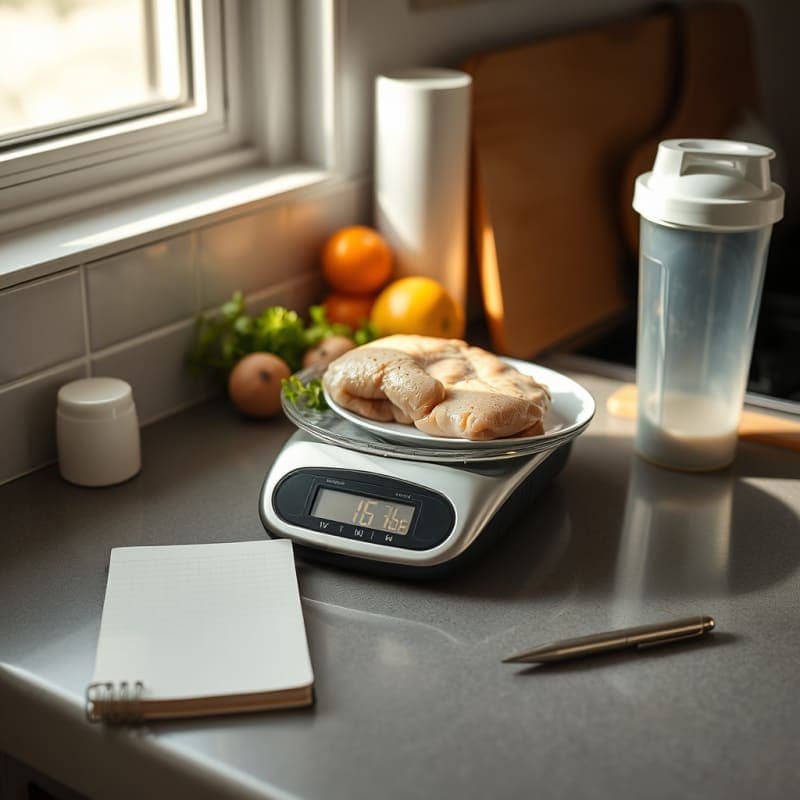
If you've spent months building strength and muscle, you know the fear that hits the moment you decide to cut calories: what if your body burns through the very muscle you sweated to build? That fear is legitimate, but it pushes a lot of people toward two equally bad extremes — avoiding any caloric deficit for years out of fear of losing their physique, or diving into a cut so aggressive it undoes months of progress in a few weeks. There's a middle path, backed by evidence, that lets you lose fat while holding onto your strength and most of your muscle. It doesn't depend on genetics or a miracle supplement — it comes down to three variables you control every day: how big your deficit is, how much protein you're eating, and what happens in the gym while the diet runs its course.
Why a caloric deficit puts muscle at risk too
A caloric deficit works because it forces your body to pull energy from stored reserves — mostly fat, but not only fat. When protein intake or training stimulus isn't enough to signal that a given muscle is still in use, part of the energy your body burns starts coming from breaking down muscle protein, not just fat. This is what's known as protein balance: in a surplus or at maintenance, your body tends to build or hold onto muscle; in a deficit, the balance tips toward loss unless you actively defend it.
The good news is that this loss is neither inevitable nor proportional to how deep the cut is. According to an analysis from Stronger by Science, context matters more than the raw calorie math: training level, body fat percentage, and strength training history change how much muscle is actually at stake during a diet. Beginners and people with more fat to lose tend to hold onto muscle more easily than advanced, already lean lifters, for whom every dieting decision carries more weight.
Sources: Stronger by Science, RP Strength
The size of your deficit changes the outcome
The more aggressive the cut, the larger the share of lost weight that tends to come from lean mass instead of fat. The recommendation for people who train is to lose weight gradually, in a range of 0.5% to 1% of body weight per week — for someone at 180 lbs, that's roughly 1 to 2 lbs a week, nowhere near the 3 to 4 lbs crash diets often promise.