You walk into the gym, glance at the free-weight rack, then at the row of machines, and finally at the cable station, and the same question comes up every time: which of these actually makes a difference for the exercise you're about to do? The answer that circulates in gym chat tends to be oversimplified: free weights are always superior, machines are just for beginners, cables are an afterthought. That hierarchy doesn't match what the research shows, and following it blindly can lead you to abandon tools that would serve your goal better. The right choice depends on the exercise, your training level, and what you're after in that moment — not on one fixed rule.
The myth that free weights are always superior
For years, the dominant idea in gyms was that free weights build more strength and more muscle because they demand more from the body. A 2023 systematic review with meta-analysis, pooling 13 studies and over a thousand participants, directly compared free-weight training against machine-based training for maximal strength, hypertrophy, and jump performance. The results don't support free weights' supposed across-the-board superiority: there was no significant difference between the two approaches on any of those measures. Only five of the included studies measured hypertrophy directly, and even in those, the muscle response was similar between the two modalities.
That equivalence makes sense once you understand what actually drives muscle growth: the mechanical tension applied to the muscle across a sufficient training volume, not the type of equipment generating that tension. A free-weight exercise and its machine equivalent can place the same relative load on the same muscle group, and the body responds to the stimulus it receives, not to the label on the equipment. That doesn't mean the two are interchangeable in every respect — the difference shows up when you measure strength transfer to the specific movement trained, not the size of muscle gained.
Sources: Stronger by Science, PubMed
What actually changes in your body between free weights, machines, and cables
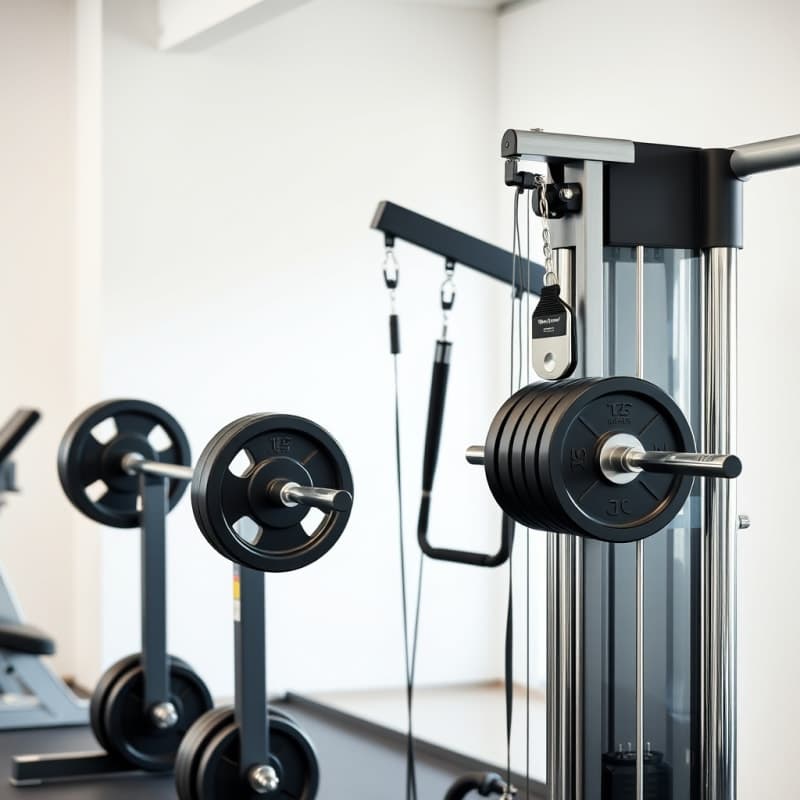
The main difference between the three isn't how much muscle you build, but what your body has to do to control the movement. With free weights, you're holding the load unsupported in space, so dozens of stabilizer muscles kick in to keep the bar or dumbbell on the right path. With machines, the path is already fixed by the equipment, which removes part of that balance demand and lets you isolate the target muscle with more precision. With cables, the load comes through a pulley system that keeps resistance relatively constant across the full range of motion, including at angles where free weights lose tension simply because of gravity.
A randomized controlled trial that compared the two approaches in people with no prior training experience found equivalent strength and hypertrophy gains between free weights and machines, with no meaningful difference in joint discomfort between groups. That reinforces that the lack of instability on a machine doesn't reduce the growth stimulus — it just shifts where the motor-control effort gets spent during the set. If you train alone or are coming back from an injury, that's a useful, practical takeaway: you're not losing effectiveness by using machines, you're just trading one kind of challenge for another.
Source: PubMed
When machines are the right call
Machines become the smarter choice in specific situations, not as a blanket substitute for free weights. If you're new to training and haven't yet learned to feel the target muscle working, a machine shortens that learning curve by removing the balance component and letting you focus entirely on execution. If you train without a spotter, machines also let you push exercises like bench press and squat close to failure much more safely, since the fixed path keeps the load from coming down on your body if you fail a rep completely.
Older adults or people with functional limitations also tend to benefit from machines first. An NSCA position statement on resistance training for older adults recommends that frail adults start with machine-based training, reserving free weights for those who already train at a higher functional level. A study in high-functioning older adults found bigger percentage strength gains with free weights in some muscle groups, like the legs and triceps, but the study's own authors concluded that free weights aren't clearly superior once you look at the full set of results.
When free weights make more of a difference
Free weights become more relevant when your goal is direct strength transfer to a specific movement, not just muscle size. The principle of training specificity holds that your body gets stronger in the exact movement pattern you train. If your goal is lifting more in the free-weight squat, deadlift, or overhead press, training those specific versions is the most direct path, because the equivalent machine mostly improves your performance on that machine.
An NSCA review on strength transfer between exercises backs this up: strength gains in an untrained exercise depend on how similar it is, in motor pattern and power demand, to the exercise you actually trained. That matters most if you play a sport that depends on balance, coordination, and force production in multiple directions at once. That kind of demand simply doesn't exist on a machine's fixed path, no matter how heavy the load.
Source: NSCA
Cables as their own tool, not just a backup
Cables sit between the two extremes and tend to be underrated by anyone who only thinks in terms of free weights or machines. Unlike free weights, where the effective resistance varies with joint angle because of gravity, a pulley system keeps the felt load more consistent across the full range of motion. That's useful in isolation exercises like flyes, triceps extensions, and shoulder abduction, where you want to keep the muscle under tension at the start and end of the movement, not just in the middle. Cables also let you adjust the pulling angle in ways that are hard to replicate with a bar or dumbbells.
In practice, you can turn these principles into simple criteria for deciding what to use on each exercise, without having to commit to one piece of equipment forever. The starting point is asking what you actually want from that specific exercise — to learn the movement, to lift more load, to isolate a muscle, or to train safely on your own — and letting that answer guide your choice. The list below sums up the most common situations in a typical strength-training session.
- Start with machines if you're a complete beginner: they remove the balance demand and let you focus on feeling the target muscle work.
- Prioritize free weights for compound lifts — squat, deadlift, overhead press — when your goal is strength that transfers to real life or to a sport.
- Switch to machines for heavy-load exercises when you train alone, without anyone to spot you in case you fail a rep.
- Use cables for isolation exercises where you want constant tension from start to finish, like flyes, triceps extensions, and lateral raises.
- Combine all three across your week instead of picking one and dropping the others — the variety also helps keep your training interesting.
There's no single best piece of equipment — there's the right equipment for the exercise, your training level, and the moment you're in.
Deciding without stalling your workout
The most common trap isn't picking the wrong equipment, it's spending too much time deciding and too little time actually training. If you're unsure which option to use, the practical guidance above already covers most day-to-day situations at the gym. Machines for beginners or for anyone training alone with heavy loads, free weights for the compound lifts, cables for isolation work with constant tension.
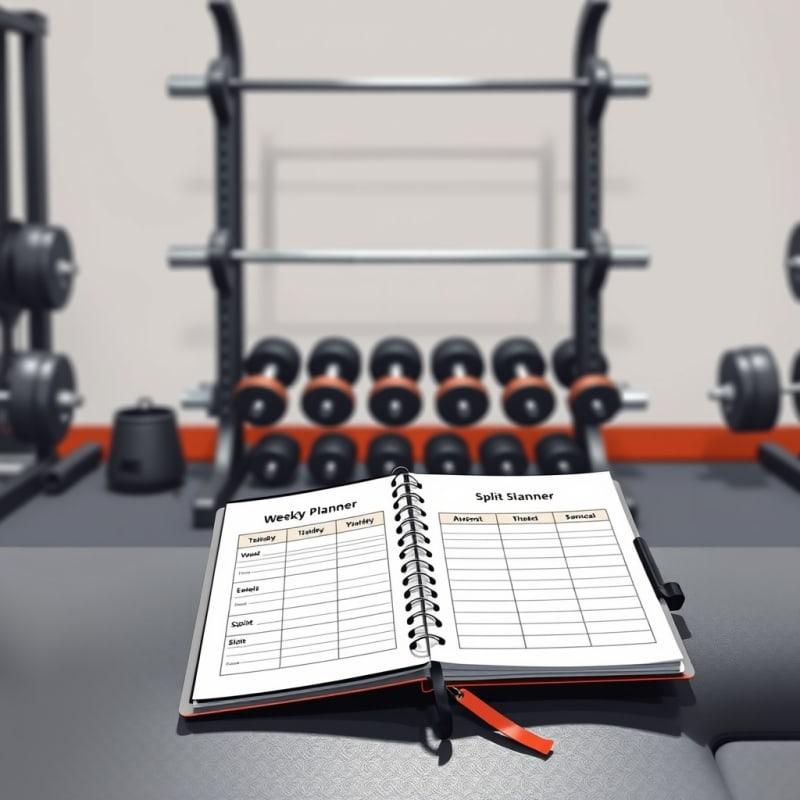
What really makes a difference long term is continuing to test and track what works for your body at each stage of training. Logging which equipment you used for each exercise in your workout log, and comparing how your load and reps evolve over the weeks, gives you a more reliable answer than any general rule. That simple habit of tracking also helps you keep your streak going without falling into the same mechanical routine month after month.