
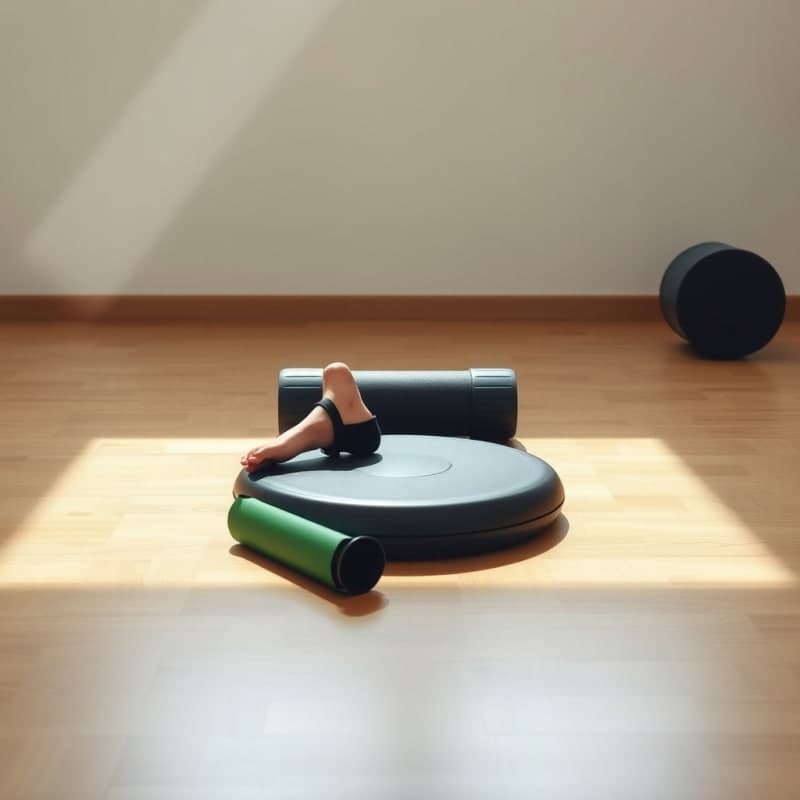
You catch the edge of a gym mat, your foot rolls inward, and you feel that sharp pain on the outside of your ankle. The swelling fades in a few days, the pain eases, and you go back to training as if nothing happened. That pattern is exactly why ankle sprains are one of the few injuries most people treat wrong by accident: they treat the pain, not the ankle. The result is an ankle that looks recovered but is still unstable underneath, and it rolls again months later, often worse than the first time.
What actually happens when you roll your ankle
Most ankle sprains happen through inversion: the foot rolls inward and the sole turns upward, forcing the ligaments on the outside of the ankle to stretch past what they can handle. The ligament most often affected is the anterior talofibular ligament, which connects the shinbone to the foot bone and is the first one to resist that motion. Depending on the force of the impact, the damage ranges from a mild stretch of the fibers to a complete tear, and clinicians sort this into grades.
In a grade 1 sprain, there's a mild stretch, the ankle can still bear weight, and instability is minimal. In grade 2, part of the ligament tears, swelling and pain with weight-bearing show up, and the joint already shows some looseness when tested. Grade 3 means a complete tear, obvious instability, and often real difficulty walking in the first hours. This grading matters because it sets the pace of return: treating a grade 3 sprain on the same timeline as a grade 1 is the recipe for coming back too early and rolling it again.
The first few days: protect the ankle without locking it down
Early on, the goal is to control swelling and take excess load off the joint, not to eliminate all movement. Elevating the foot, applying compression, and avoiding heavy weight-bearing through sharp pain in the first hours helps keep swelling from piling up and slowing rehab later. But keeping the ankle fully immobilized for weeks, waiting for pain to hit zero before moving it at all, tends to leave you with a stiffer, weaker ankle than one that starts light, pain-free movement in the first few days.
That doesn't mean forcing range of motion through pain, or putting full weight back on it too soon. It means small, controlled movements — rotating the foot, flexing and extending the ankle within a pain-free range — while swelling is still being managed. That balance between protecting the joint and keeping it moving is what separates a full recovery from an ankle that never quite feels right again.