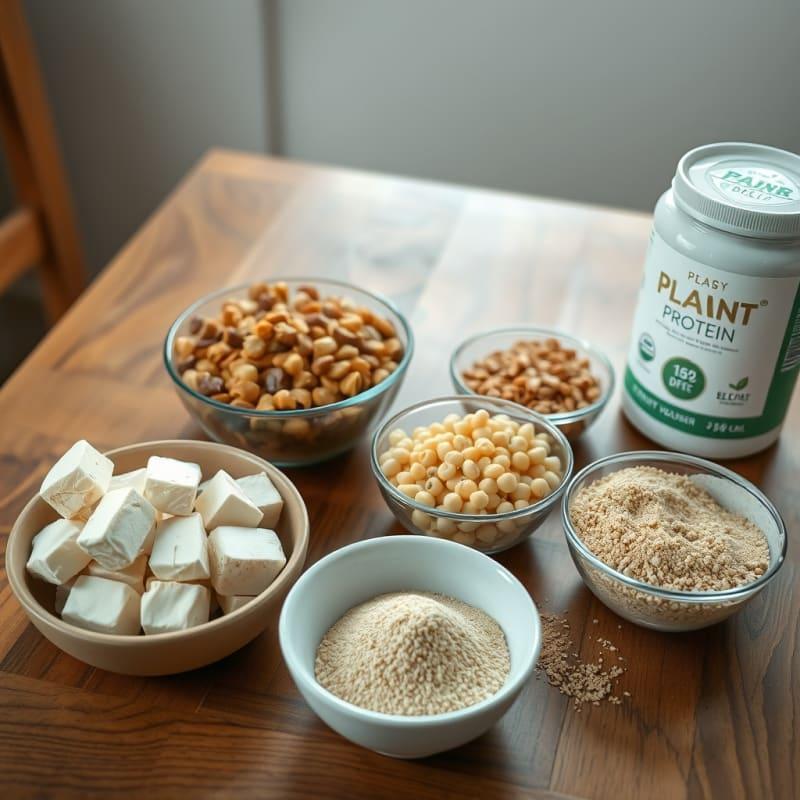
Somewhere between one supplement aisle and the next, protein before bed has become a ritual of its own: the casein shake at eleven at night, the cup of Greek yogurt before the lights go out. The pitch is appealing. You go seven or eight hours without eating, so in theory your muscles would run out of raw material right when they do most of their recovering. But does that extra meal actually change your results, or is it one more layer of complexity in a routine that already has plenty to keep track of? It helps to separate what the studies show from what marketing likes to suggest.
What happens to your muscle overnight
Muscle is always moving in two directions: it builds new protein and breaks down the old. To grow, the balance has to tip toward building, and that depends on having amino acids available in your bloodstream. After dinner, amino acid levels drift down over the hours, and while you sleep you are effectively fasting, which makes the night a long window in which the supply of raw material tends to shrink.
That is why researchers tested giving protein right before sleep after an evening strength session. In one of the first trials, 40 g of casein before sleep increased whole-body protein synthesis overnight (311 versus 246 micromol per kg over 7.5 hours) and improved net protein balance after exercise. The rise in mixed muscle protein synthesis was about 22%, but only borderline significant, so it is not a result to treat as settled.
Source: PubMed
Another trial, with 48 older men, compared 40 g of casein, 20 g of casein, 20 g of casein plus 1.5 g of leucine, and a placebo before sleep. The casein doses supported myofibrillar protein synthesis through the night. In other words, your body does make use of protein eaten before sleep, and the amino acids end up built into muscle tissue.
Casein, whey, or real food
Casein got its reputation because it is a slow-digesting protein: it releases amino acids gradually and keeps them elevated for longer. That sounds like the perfect match for an overnight fast. The catch is that keeping amino acids high in the blood for longer does not necessarily mean stimulating more muscle building.
A Stronger by Science breakdown of a trial comparing the two proteins makes exactly that point: the overnight muscle protein synthesis response to whey and casein does not differ, and casein holding amino acids up longer did not translate into more synthesis. There are also null results: in one study, 30 g of casein, with or without extra leucine, did not raise muscle protein synthesis during overnight recovery after exercise. The honest reading is that the effect shows up in some trials and not in others, and that choosing between the two proteins matters less than it seems.
Source: Stronger by Science
Before bed, protein is useful, but the type you pick matters far less than the habit of eating enough across the whole day.
From overnight synthesis to muscle in the mirror
Here is the distinction marketing tends to erase: measuring protein synthesis over a single night is not the same as measuring how much muscle you gain over months. The first is a short-term lab measurement, taken in a small number of people under controlled conditions. The second depends on dozens of factors that add up, such as training volume, load progression, sleep, and above all the total amount of protein you eat over the following days and weeks.
So treating pre-sleep protein as a shortcut to muscle growth is an exaggeration. It can be a handy tool when your day fell short of your target, but it does not replace the basics. If you already hit your daily protein and train with progression, the extra gain from a nighttime dose is likely to be small.
Who benefits most
A nighttime dose makes more sense in a few situations. The first is training late in the evening: the muscle has just been stimulated, there is a long recovery window ahead, and dinner is far behind you. The second is not being able to reach your protein target with regular meals, where a yogurt, some cottage cheese, or a shake fills the gap without requiring another full meal.
The third is having little appetite at night or having eaten dinner too early. In those cases, a light protein snack helps spread your protein more evenly across the day. For everyone else, the value is in having one more practical option, not in following a mandatory rule.
How to apply it without overcomplicating things
If you decide to try it, start small and watch how your body responds, especially your sleep. A heavy meal close to bedtime can cause discomfort or reflux, or disrupt rest for some people, and sleeping badly costs your results more than any marginal protein gain could repay.
- First work out how much protein you eat in a day; if you already hit your target, a nighttime dose is optional.
- Stick to servings of 20 to 40 g, the range used in the trials, and choose something you tolerate well before lying down.
- Use everyday foods such as Greek yogurt, cottage cheese, milk, or eggs before thinking about a supplement.
- Eat a little while before bed rather than once you are already in it, to avoid discomfort.
- Watch your sleep for a week or two; if it gets worse, drop the nighttime meal and spread your protein across the day instead.
A simple way to find out whether it is working is to log it. Writing down your daily protein, your sleep quality, and how your loads are progressing in your workout log shows whether there is a real difference within two or three weeks, instead of leaving you to rely on impressions. And keeping your workout streak alive is still the factor that weighs the most: no nighttime meal makes up for a week of missed sessions.