Cutting back on meat, going vegetarian or vegan, or just trying to diversify your meals — there's no shortage of reasons to look for protein in plant sources. What trips most people up is the question that follows: can you actually build muscle without meat, eggs, or whey? Old myths still make the rounds — that you have to combine rice and beans in the same meal for the protein to "count," that soy tanks your testosterone, that you need to spend a fortune on imported supplements. None of that holds up well against what the research actually shows.
Why plant protein has this reputation
Comparisons between protein sources usually rely on scales like PDCAAS and DIAAS, which measure how well a food supplies the essential amino acids your body can't make on its own. Plant proteins generally score lower on these scales than egg, dairy, or meat — not because they're "worse" protein in some vague sense, but because their amino acid profile tends to be less complete and more variable from food to food. The catch is that these scales have known limits: they don't account well for antinutrient effects present in some grains and legumes, which can artificially inflate the score of certain foods.
The amino acid behind most of that gap is leucine, the main chemical trigger for muscle protein synthesis after a meal. Animal sources tend to deliver a higher proportion of leucine per gram of protein than most plant sources. That doesn't mean plant protein doesn't work — it means that to trigger the same muscle-building signal, you generally need to eat a slightly larger portion or lean on sources that are more concentrated in leucine, like soy.
Sources: PubMed, Examine.com
The soy and testosterone myth
No other plant food carries as much baggage as soy. The idea that it "feminizes" men or lowers testosterone gets repeated so often that it pushes people away from tofu, edamame, and textured soy protein even though they're cheap, complete sources of protein. The fear traces back to soy's isoflavones, compounds that share some structural similarity with estrogen — which fueled speculation, decades ago, that meaningful doses might alter male hormones.
When randomized controlled trials actually tested this, the result was consistently null: a review pooling fifteen controlled trials, using between 10 and 70 grams of soy protein per day, found no significant effect on total testosterone, free testosterone, or the protein that carries it in the blood. Studies with young men strength training for 12 weeks, comparing whey, soy concentrate, soy isolate, and blends of the two, also found no meaningful difference in hormones or in lean mass gains between groups. For the kind of intake someone training actually eats, soy isn't a hormonal problem.
Source: Examine.com
How to close the gap without counting every gram
The factor that matters most isn't any single protein source, it's your total daily intake. When intake lands around 1.6 grams of protein per kilogram of body weight per day — the range strength-training literature usually points to for maximizing hypertrophy — plant-based diets tend to support strength and muscle gains in a way that's comparable to diets that include meat. The gap shows up more in studies comparing isolated sources in small amounts, not in full diets planned to hit the day's target.
In practice, that takes the pressure off an old rule that still circulates: that legumes and grains need to be combined in the same meal for the protein to "complete" each other. Your body keeps a pool of amino acids circulating for several hours, so beans at lunch and rice or quinoa at dinner already does the job of varying your sources through the day. What actually helps is making sure at least one meal in the day includes a generous portion of a more leucine-concentrated source — soy, textured pea protein, or a fortified plant blend — instead of spreading thin, diluted plant protein across every meal.
This works the same way logging your training does for keeping a streak alive: what builds results isn't nailing your protein perfectly on one single day, it's repeating the pattern — adequate daily total, at least one concentrated source, variety across the week — consistently. Tracking what you actually eat for a few days, even loosely, quickly shows whether the target is being met or just intended.
Source: Stronger by Science
Plant protein isn't inferior protein — it's protein that asks for a bit more portion size and variety on your plate.
The sources worth building your plate around
Not every plant source delivers the same thing. A handful come close to matching the amino acid profile of animal sources, while others work better as part of a combination than on their own. Here's what actually moves the needle on your daily target:
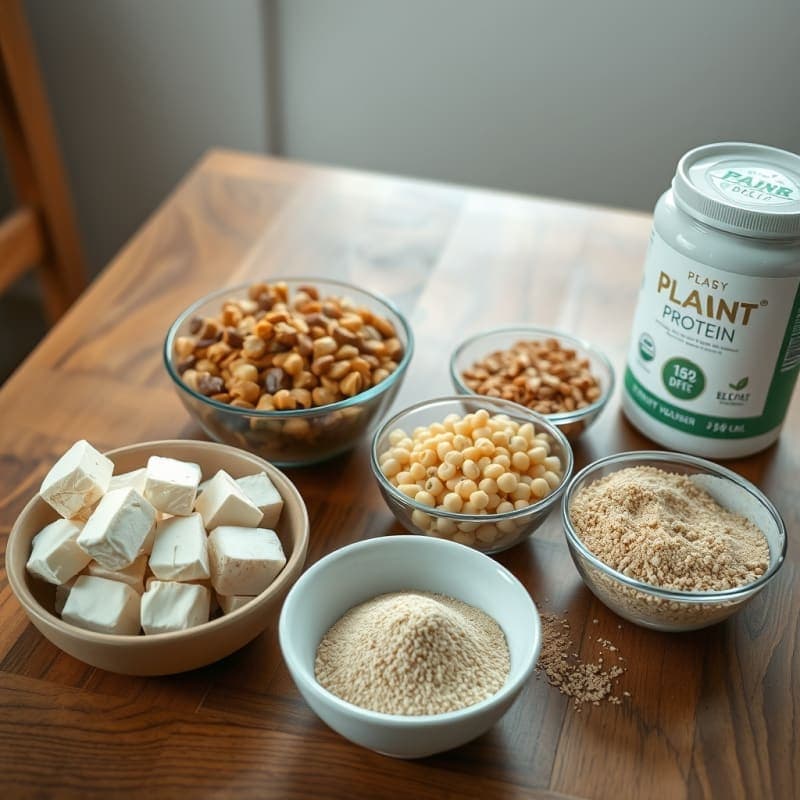
- Soy in its forms (tofu, tempeh, edamame, textured soy protein) — the plant source whose amino acid profile comes closest to animal sources, and versatile across savory meals
- Legumes (lentils, beans, chickpeas, split peas) — a cheap, accessible base, great paired with grains across the day
- Seitan — made from wheat gluten, quite concentrated in protein, but with an incomplete amino acid profile on its own
- Quinoa — one of the few grains with a relatively complete amino acid profile, though with less protein per serving than legumes
- Pea, rice, or blended plant protein powders — useful for closing the daily target without relying only on solid meals
- Peanut butter and other nut butters — contribute protein, but work better as a complement than as a main source
Mixing these sources across the week, instead of repeating the same one every day, solves most of the amino acid quality concern — and it also prevents the meal fatigue that's the most common reason people give up on a plant-based diet in the first few weeks.
A meat-free day that hits the target
In practice, a day that closes out your protein target without meat tends to look like this: soy yogurt or scrambled tofu at breakfast, a legume paired with rice or quinoa at lunch, a plant protein shake or peanut butter as a snack, and soy again or a bigger portion of legumes at dinner. The detail that actually makes the difference is making sure at least two of those meals carry a concentrated source — not just small protein garnishes scattered across the plate.
There's no single formula: the menu changes depending on what's available, your budget, and your own taste. What doesn't change is the principle behind it — an adequate daily total, at least one concentrated source per day, and variety across the week. Adjusting this gradually, paying attention to how your body responds and how easy the pattern becomes to repeat without effort, is worth more than following a rigid plan nobody can stick to past the first month.
What decides the outcome isn't where your protein comes from — it's the consistency of hitting the target, meal after meal, week after week.