 Tracking
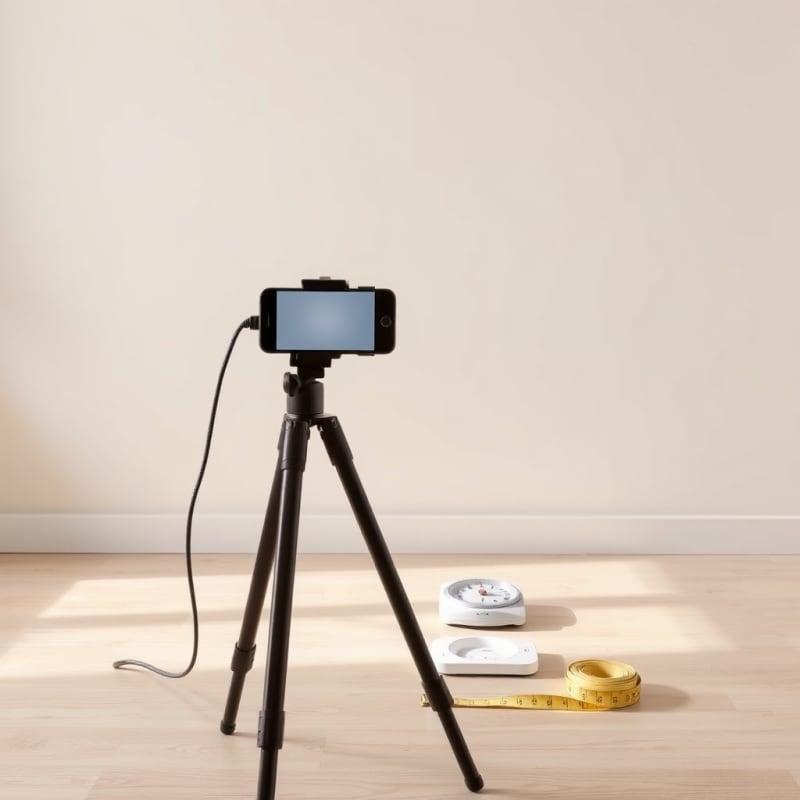
Progress photos: how to take them so the comparison actually counts
· 6 min read
Work out your Body Mass Index and see which range it falls into, according to the World Health Organization criteria.
BMI divides your weight by the square of your height and returns a single number. It is the indicator the World Health Organization uses to classify body weight at population scale, precisely because it only takes two simple measurements.
That same reason is its limitation: the calculation has no idea how much of your weight is muscle, bone, fat or water. Two people with the same BMI can have completely different body compositions, and someone who has trained hard for years usually lands above the normal range without carrying excess fat.
So the number works better as a starting point than as a verdict. It tells you whether a closer look is worth it, and it is tracking over time, not today's snapshot, that shows where your body is heading.
BMI is a population-level indicator and does not tell muscle mass from body fat. Athletes, pregnant people, children and older adults should not use this number on its own, talk to a health professional for a full assessment.
The studies and reports behind this calculator's formulas and ranges.
Last updated: Editorial policy
Divide your weight in kilograms by your height in metres squared. Someone who weighs 75 kg and is 1.75 m tall has a BMI of 24.5, that is exactly the calculation this page runs, converting the height from centimetres to metres.
BMI is useful as population screening, but it does not tell lean mass from fat: a very muscular person can show up as overweight without actually carrying excess weight.
Between 18.5 and 24.9, according to the World Health Organization. Outside that range, it is worth talking to a health professional before making any changes.
Not necessarily, body composition, genetics and activity level matter as much as the number. Use BMI as a starting point, not as a verdict.
Yes, log your workouts in Streak and follow your streak and your progress while you adjust your habits.
Articles to help you understand your result and turn the number into training.
Find your estimated one-rep max and know how much to lift in every intensity range of your training.
Open calculatorFind out how many calories your body burns at rest and how much to eat per day for your routine.
Open calculatorFind out how much protein per day your goal calls for and how to split that target across your meals.
Open calculatorFind your maximum heart rate and your five training zones in beats per minute.
Open calculatorEstimate your body fat percentage and lean mass with a tape measure, what BMI can't tell apart.
Open calculatorWork out your pace per kilometer, your finish time or the distance and see the projection for the 5K, 10K, half and full marathon.
Open calculatorFind out how many liters of water to drink today from your weight, your workout and the climate, and how to spread it across the day.
Open calculatorEstimate your VO₂ max from the distance you run in 12 minutes and see your rating for your age and sex.
Open calculatorFind out how many calories your workout burned from the activity, your weight and the duration.
Open calculatorBMI is only a snapshot. Log your workouts in Streak and see your real progress, one workout at a time.
Printed from fyrhen.com, for information only, not a substitute for professional advice.
Articles to help you understand your result and turn the number into training.