 Performance
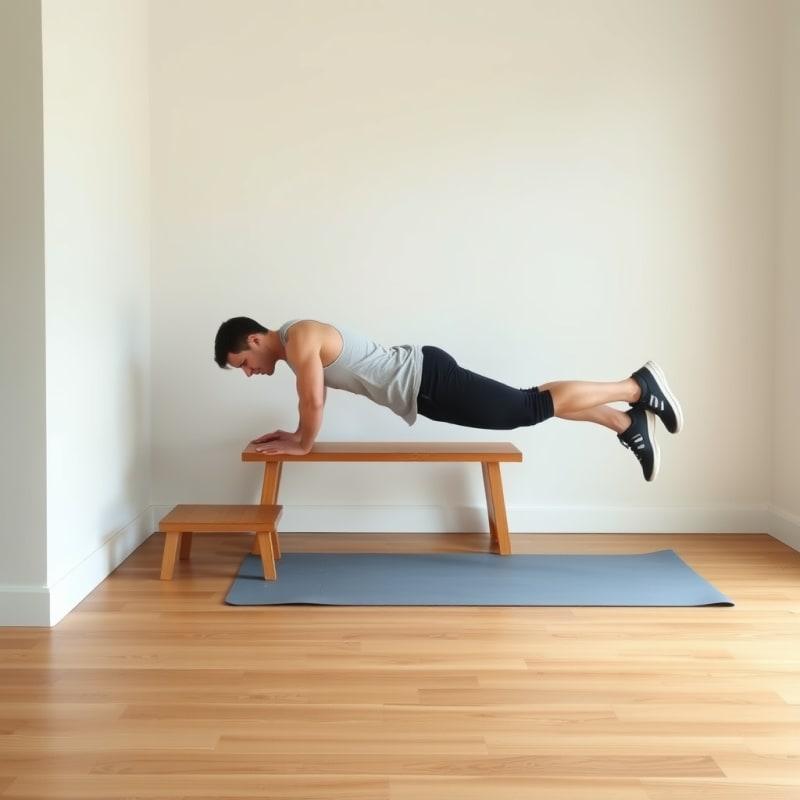
Bodyweight training: how to keep progressing when push-ups get easy
· 6 min read
Find out your maximum heart rate and your five training zones in beats per minute, add your resting heart rate for a personalised result.
Maximum heart rate is estimated with the Tanaka formula: 208 minus 0.7 times your age. It was proposed in 2001 from a review of 351 studies covering more than 18,000 adults and is more accurate than the classic 220 minus age.
When you enter your resting heart rate, the zones use heart rate reserve (the Karvonen method), which takes your fitness into account. Without it, the zones are straight percentages of the maximum.
The five zones split effort from easiest to hardest. Most of an endurance athlete's volume tends to sit in zones 1 and 2, with zones 4 and 5 in short blocks: that mix improves fitness without piling up fatigue from one session to the next.
These formulas estimate the average maximum heart rate of the population, and yours may be up to 10 beats higher or lower. Use the zones as a starting point; anyone with a heart condition or on medication that affects heart rate should talk to a doctor first.
The studies and reports behind this calculator's formulas and ranges.
Last updated: Editorial policy
220 minus age is the best-known formula, but it was published without a supporting study and underestimates the maximum heart rate of older people. Tanaka (208 − 0.7 × age) was derived from data on thousands of adults and is more accurate, especially after 40.
Right after waking up, still lying down, count your pulse at the wrist or neck for 60 seconds, or use your watch or chest strap. Repeat for three or four mornings and use the average, because poor sleep, caffeine and stress push the number up.
It depends on your goal, but a common guideline for endurance training is to spend about 80% of the time in zones 1 and 2 and the other 20% in zones 3 to 5. Hard sessions pay off more when the rest of the week is easy.
A chest strap reads the heart's electrical signal and is usually more accurate, especially during sprints and quick pace changes. A watch's optical sensor works well at a steady pace but can lag or fluctuate. Use the same device to compare one session with the next.
Zone 2 burns proportionally more fat and can be sustained for a long time, which helps total energy expenditure. But weight loss is driven by your calorie balance over weeks, and training consistently matters more than the zone you pick on any given day.
Articles to help you understand your result and turn the number into training.
Find your estimated one-rep max and know how much to lift in every intensity range of your training.
Open calculatorFind out how many calories your body burns at rest and how much to eat per day for your routine.
Open calculatorWork out your BMI from your weight and height and see which World Health Organization range it falls into.
Open calculatorFind out how much protein per day your goal calls for and how to split that target across your meals.
Open calculatorEstimate your body fat percentage and lean mass with a tape measure, what BMI can't tell apart.
Open calculatorWork out your pace per kilometer, your finish time or the distance and see the projection for the 5K, 10K, half and full marathon.
Open calculatorFind out how many liters of water to drink today from your weight, your workout and the climate, and how to spread it across the day.
Open calculatorEstimate your VO₂ max from the distance you run in 12 minutes and see your rating for your age and sex.
Open calculatorFind out how many calories your workout burned from the activity, your weight and the duration.
Open calculatorTraining in the right zone only pays off when it becomes routine. Log every session in Streak and keep your streak going.
Printed from fyrhen.com, for information only, not a substitute for professional advice.
Articles to help you understand your result and turn the number into training.