You train calves every week, sometimes twice, and the result stays the same: two thin lower legs under thighs that keep growing. Plenty of people decide calves are pure genetics and give up, or treat them as a chore at the end of the workout, a handful of quick reps with the brain switched off. In most cases the problem isn't how hard you try but how you do it: the exercise you pick, the range of motion, the speed and the frequency. This article lays out what is known about each of those pieces and suggests a simple way to build your calf training.
Why calves seem not to respond
The calf has two main parts: the gastrocnemius, the visible muscle that crosses both the knee and the ankle, and the soleus, which sits underneath and crosses only the ankle. Because you use your calves all day to walk, climb stairs and stand, they are already used to constant load. A small stimulus, like a few short reps with light weight, is nothing new to them.
Execution is the other issue. Most people move fast, bounce at the bottom and come up only halfway, borrowing the spring-like recoil of the Achilles tendon instead of making the muscle work. When the tendon returns the energy, the muscle gets less tension than it seems, and what you feel is fatigue from repetition, not a growth stimulus. Treating the calf like any other muscle, with a load that challenges you, controlled reps and sets taken close to failure, often changes the picture.
So before blaming genetics, review the basics: how much weight you use, how close to your limit you finish a set, and whether the movement has a real pause and full range. Calf size and shape do vary from person to person, but nobody finds their own ceiling by training carelessly.
Source: PubMed
Standing or seated: which exercise to choose
With the knee straight, the gastrocnemius is more stretched and responds better to training. In a study of young women, the straight-leg version increased the thickness of the medial and lateral gastrocnemius more than the bent-knee version, while the soleus showed the opposite pattern. In practice, that means the standing calf raise, on a Smith machine, a calf machine or a step, should be your main exercise if your goal is bigger visible calves.
The seated version, with the knee bent, takes the gastrocnemius out of the picture and puts the work on the soleus. It has less cosmetic payoff, but it contributes to ankle strength and endurance, so it still earns a spot in your week, usually at lower volume. If you only have access to one option, choose the standing one.
Another clue comes from an eight-week study in which participants trained calves three times a week on a leg press using partial range of motion. The group that worked in the initial part of the movement, when the muscle is more lengthened, gained more in the lateral gastrocnemius than the group that worked only in the final part. The authors concluded that training at longer muscle lengths may optimize growth. That backs up a practical rule: the bottom of the movement, with your heel well below the step, is the most valuable part.
Source: PubMed
For calves, the bottom of the rep matters more than how high you rise: stretch deep, pause for a beat, then press up.
Frequency and volume that fit your week
Because calves recover relatively fast and tolerate frequent stimulus, training them two to four times a week usually works better than one long session. Splitting your sets also helps: spreading volume across several days avoids sets getting worse from fatigue and keeps every rep high quality. A reasonable starting point is 2 to 4 sets per session, increasing only when you recover well and the load keeps going up.
RP Strength's guidance suggests about 4 sets per session for people training twice a week and 2 to 3 per session for those training three times, with a ceiling that rarely goes past 12 sets per session. These numbers come from coaching recommendations, not controlled trials, so treat them as a starting point and adjust to how your body responds.
- Pick one standing exercise as your main lift and take sets close to failure, leaving one or two reps in reserve at most.
- Lower all the way into the stretch, pause for 1 to 2 seconds at the bottom and rise without bouncing.
- Take 2 to 3 seconds to lower and rise under control, without swinging your body.
- Do 8 to 15 reps per set and raise the weight once you pass the top of the range with good form.
- Add the seated calf raise once or twice a week to cover the soleus.
- Spread your sets across 2 to 4 days instead of cramming everything at the end of a leg session.
If your schedule is already packed, you don't need a dedicated day: one or two sets at the end of each lower-body workout, or even at home on a stair step, take care of frequency. What matters is that calves stop being the last thing you do with your mind on autopilot.
Source: RP Strength
How to progress without getting frustrated
Calves grow slowly, and frustration tends to show up because the mirror shows no change for weeks. What you can track objectively is load and reps: if today you do 12 reps with 90 lb and six weeks from now you do 12 with 120 lb, the stimulus is rising, even if the tape measure takes longer to catch up.
Logging those sets helps more than it seems. A simple history with weight, reps and a note on how the lowering phase felt shows whether you are really progressing or just repeating yourself. When calves become an item you check off every session, consistency stops depending on remembering in the moment and becomes part of the ritual, like any other exercise in your routine.
Adjustments for training at home
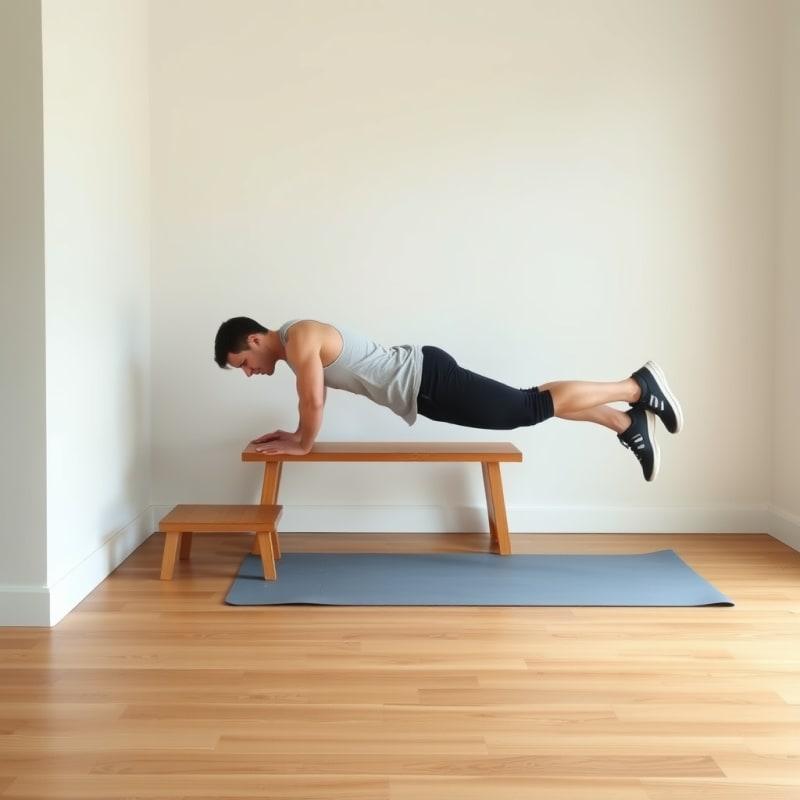
At home, a stair step or a sturdy ledge does the job. For more load, hold a backpack with books or a dumbbell, or switch to the single-leg version, which doubles the relative load without extra weight. Keep one hand on the wall for balance only, not to help you rise.
If bodyweight gets easy, slow down: three seconds to lower, two seconds paused at the bottom and a controlled rise make the same load far harder. You can progress a long way just by adjusting tempo, pause and range before buying any equipment.
Calves aren't stubborn: they just ignore training that looks like what they already do all day.