Menopause comes with a list of changes most women don't see coming: weaker bones, faster strength loss, worse sleep, and in the middle of it all, the sense that the training that used to work in your forties just doesn't deliver the same results anymore. The problem isn't lack of effort — it's that the body changes in specific ways during this phase, and strength training is still the right tool, but it only works if you adjust it to that new hormonal reality. Understanding what actually changes, and what the research says about training through it, helps you avoid two common mistakes: giving up on lifting out of fear of injury, or training the exact same way you always have and getting frustrated when the results stop showing up.
What menopause actually changes in your body
The drop in estrogen that marks menopause doesn't just affect your menstrual cycle: estrogen also regulates how fast bone tissue turns over, and its decline speeds up bone mineral density loss in the years around the transition. The World Health Organization describes this loss as a major factor behind rising osteoporosis and fracture rates in postmenopausal women, which makes this period a critical window for deciding how to train — not a reason to stop training.
That same hormonal shift also slows recovery a bit and can change how body fat is distributed, but that doesn't mean strength and muscle mass are doomed to decline with no way around it. What the research shows is that the type of stimulus you apply during this phase starts to matter more than it used to: training however you feel like stops being enough.
Source: WHO/OMS
Strength training changes the trajectory of your bones
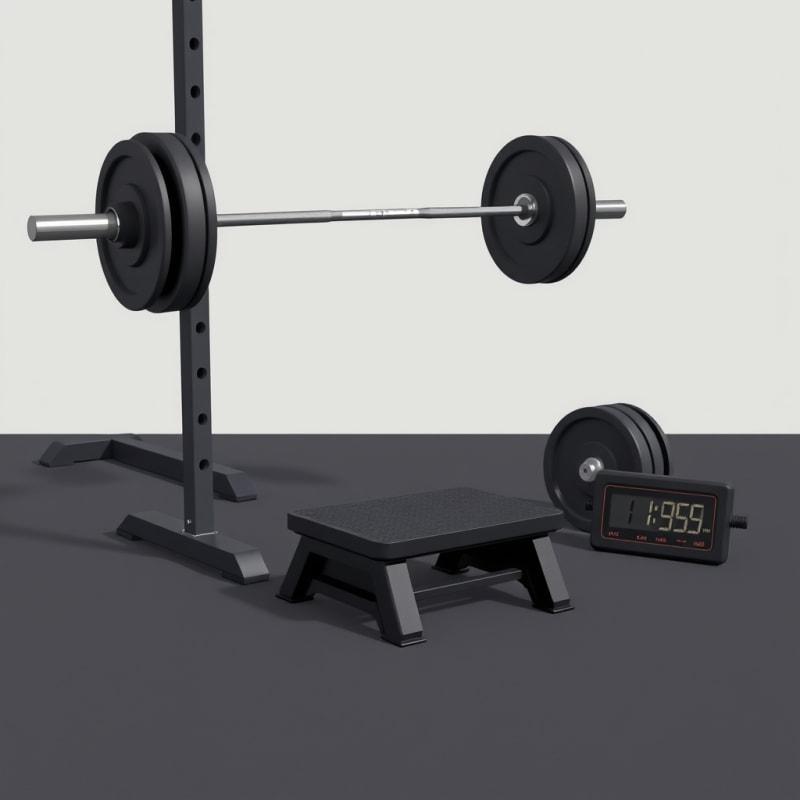
The most cited study on this topic is LIFTMOR, a randomized controlled trial that followed postmenopausal women with low bone mass for eight months. One group trained under supervision twice a week with genuinely heavy loads — above 85% of one-rep max, in five sets of five reps — plus impact exercises; the other followed a low-intensity home program. The heavy-training group improved bone strength indices and physical function, with no serious adverse events under proper supervision.
Preliminary data from the same research program, with a smaller sample, put numbers to that difference: the training group showed roughly a +0.3% change in femoral neck bone density against a 2.5% drop in the control group, and a 1.6% gain at the lumbar spine against a 1.7% loss in the control group. These are preliminary findings, not the final results of the complete trial, but they point in the same direction: heavy, well-supervised training isn't dangerous for bone in postmenopausal women — it's protective.
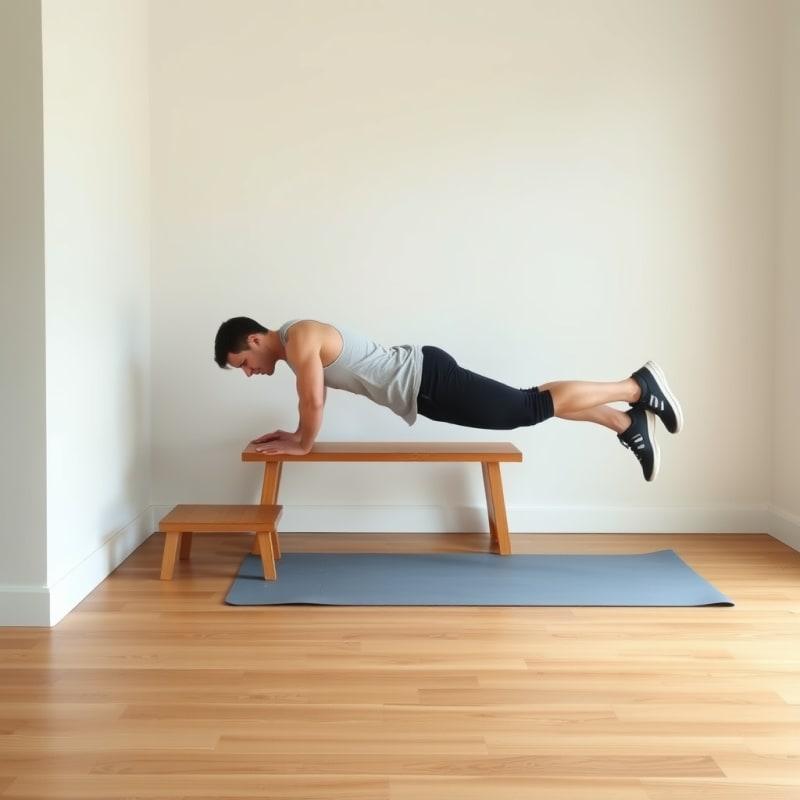
Training heavy also doesn't have to mean training slowly all the time. A study that compared, over twelve months, power training — movements performed faster and more explosively — with traditional strength training in postmenopausal women, all of whom were supplementing calcium and vitamin D, found that power training preserved bone mineral density better than slow strength training did. In practice, that's a good reason to include some velocity variation — a squat performed with intent to rise fast, a controlled jump, a light dumbbell snatch — alongside your traditional heavy work, instead of training at the same slow tempo on every set.
Sources: PubMed, PubMed, PubMed
Bone responds to mechanical stimulus, not to age: heavy, well-dosed training is still the strongest signal you can send your body to preserve its structure.
Combining resistance training with impact
A meta-analysis published in Osteoporosis International compared standalone resistance training protocols with protocols that combine resistance training and impact exercises, like jumps. Standalone resistance training produced bone density gains that fell short of statistical significance at the femoral neck and lumbar spine; the combined protocol did not fall short.
A more recent network meta-analysis, from 2023, reinforces that pattern: comparing different training strategies, it found that moderate-intensity training done three times a week was the most effective approach for bone mineral density at the lumbar spine, femoral neck, and total hip among the postmenopausal women studied. Both studies point to the same takeaway: regular frequency, a load heavy enough to be a real stimulus, and, when possible, some element of impact.
Hot flashes, sleep, and the consistency gap
Hot flashes and broken sleep make any routine harder to stick to, training included, and that creates a cycle where you end up training less at exactly the phase when you'd need more regularity. A randomized controlled trial with 65 postmenopausal women tested 15 weeks of supervised resistance training, three times a week, and found nearly a 50% drop in the frequency of moderate-to-severe hot flashes compared to the control group, along with improved quality of life in the sleep and vasomotor symptom domains.
One honest caveat is worth noting: a two-year follow-up from the same research group found that this specific benefit on hot flashes didn't hold up in the long run once the supervised program ended. That doesn't make training pointless — it reinforces that the payoff depends on keeping the practice going, not on one isolated stretch of effort.
Source: PubMed
How to structure the training in practice
A twenty-week trial using free-weight training in middle-aged women, both before and after menopause, suggests that higher weekly volumes — something like six to eight sets per muscle group per week, or more — tend to be necessary to produce real changes in body composition at this stage, and that free-weight training outperformed machine training for strength gains in this group.
That points toward a training plan built around free-weight compound lifts — squat, deadlift, overhead press, row — with enough volume to count as a real stimulus, load that progresses month over month, and, ideally, guidance from a professional the first few times you push into heavier loads.
Source: PubMed
- Train strength at least two to three times a week, with genuinely heavy sets, not just light maintenance sets.
- Add some element of power or controlled impact — light jumps, explosive step-ups, light dumbbell snatches — alongside your traditional heavy work.
- Prioritize free-weight compound exercises, like squats, deadlifts, and overhead presses, instead of relying only on machines.
- Increase load or volume gradually every few weeks, instead of repeating the same routine for months.
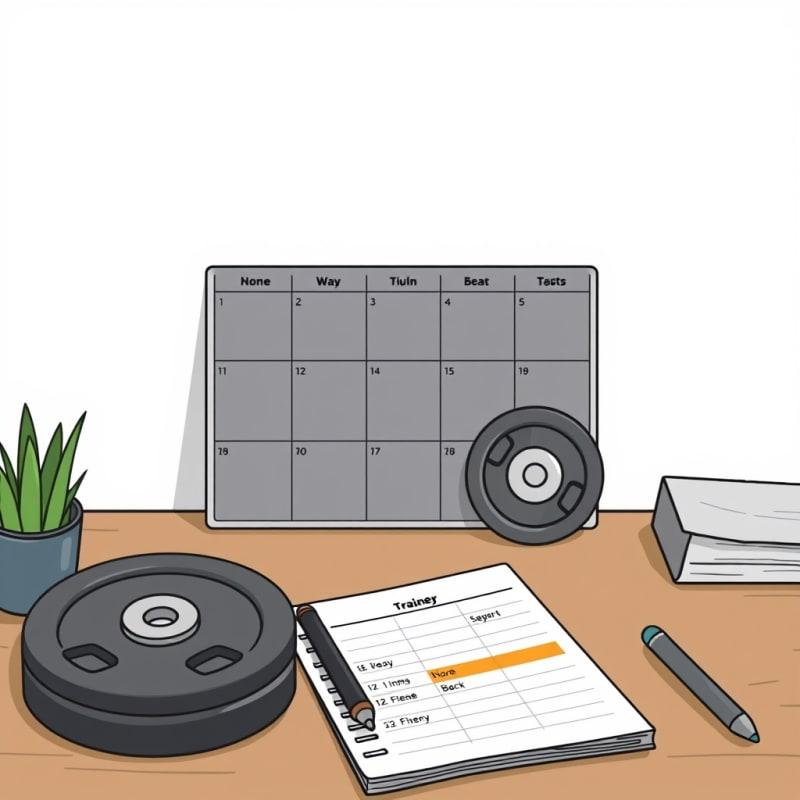
- Log your training — sets, loads, frequency — because bone gains take months to show up, and without that record it's easy to lose track of how much you're actually training.
- Talk to your doctor about calcium, vitamin D, and any individual limitations before ramping up intensity.
None of these studies measured a single session: every one of them measured months of repeated training. During menopause, keeping the streak going matters more than any one perfect workout.
That's why it's worth treating strength training during menopause as a months-long project, not a weeks-long one. The effects on bone and on hot flashes only showed up after a long stretch of regular practice, never from a single session. Heavy training, with some element of power, done consistently over time, was exactly the variable these studies tested — and it's the variable that's under your control starting today.